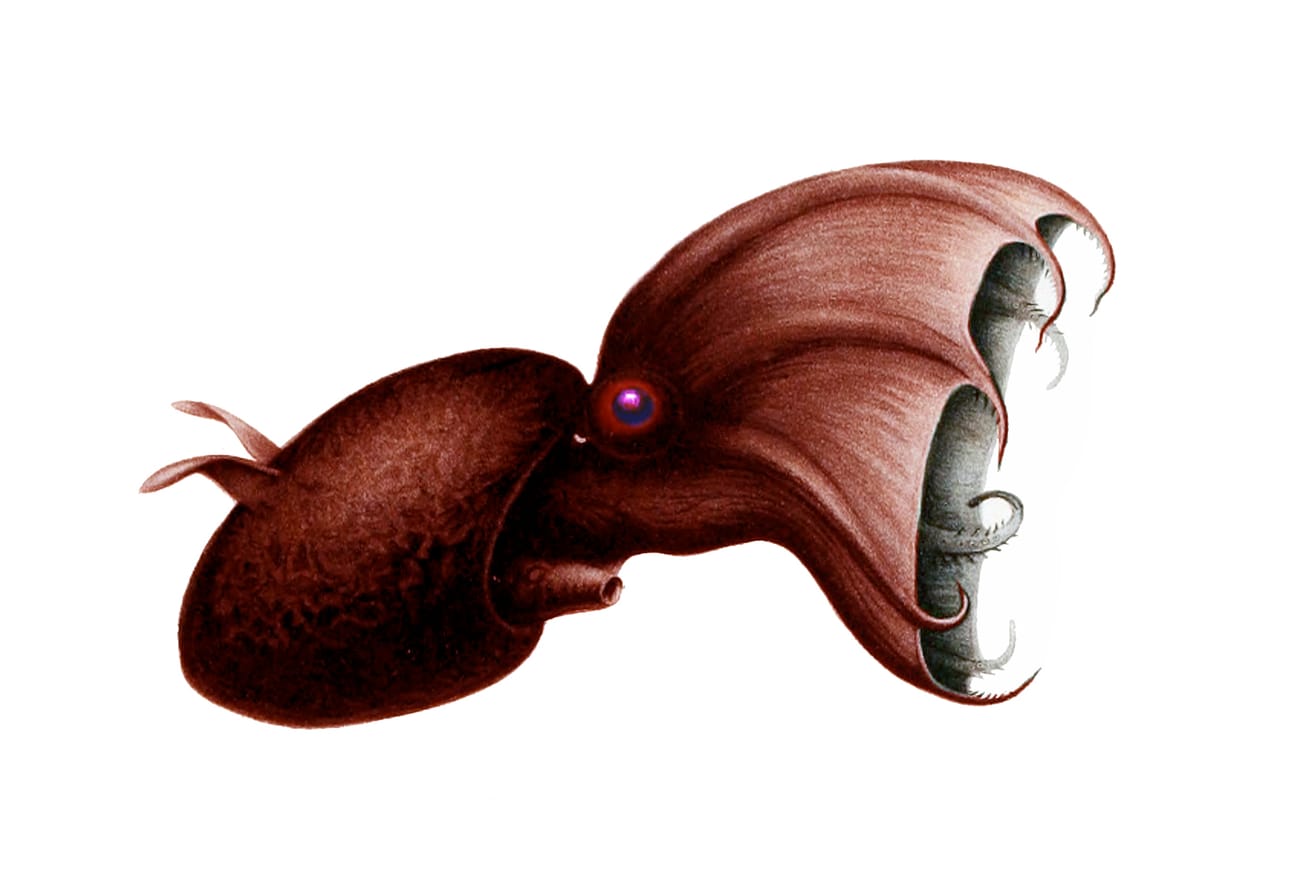
Vesper
Vampire squid, Vampyroteuthis infernalis. Plate by Carl Chun, 1910.
Neither a vampire nor a squid. It turns its webbed arms inside out like a cloak, lights their tips, and vanishes behind them.
Nogama is a game studio. Its first two games both go the same way: straight down.
Let the line downWe are a small independent studio making games for phones. Two are on the line so far, hanging at two very different depths.
200 mTwilight
Sort the light.
A sort puzzle whose pieces are alive. Tap a vent, tap another, and bring each species together before your moves run out. 1,500 levels, a daily dive, three worlds on the way down.
On iPhone, in beta.
1,000 mMidnight
At a thousand metres the last sunlight is gone. Below here, every light is one that something alive is making.
Dark water, living light.
A creature-collecting dive through the real zones of the ocean. Every creature is a real species, drawn with its true silhouette. The deeper it lives, the rarer it is, and the more it glows.
On iPhone, in development.
Vampire squid, Vampyroteuthis infernalis. Plate by Carl Chun, 1910.
Neither a vampire nor a squid. It turns its webbed arms inside out like a cloak, lights their tips, and vanishes behind them.
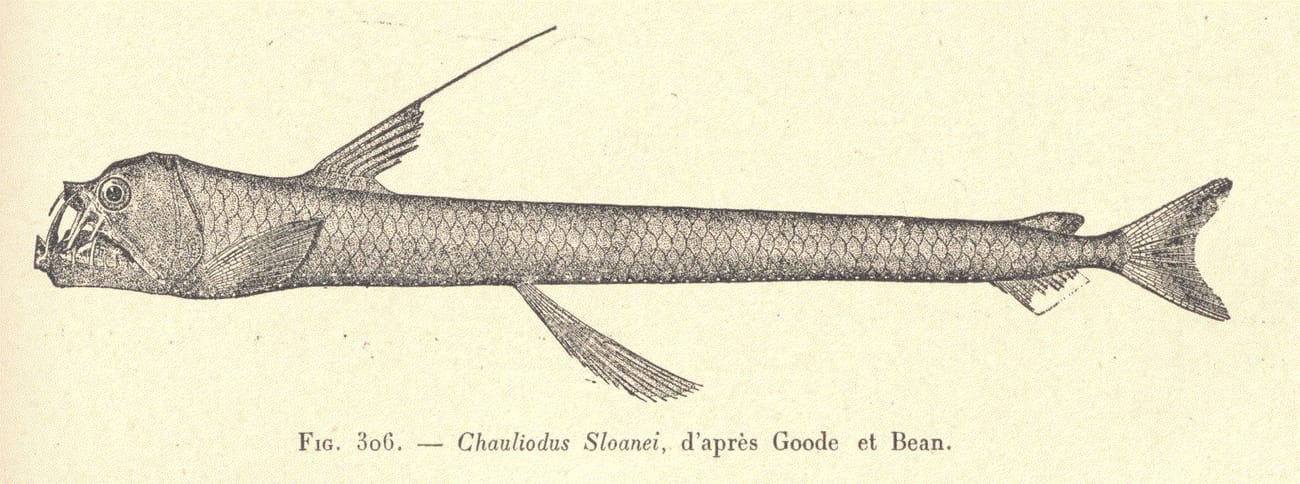
Viperfish, Chauliodus sloani. Engraving after Goode and Bean, 1907.
Its fangs are too long for its mouth, so they close outside it, up past the eyes. A lure on its back does the calling.
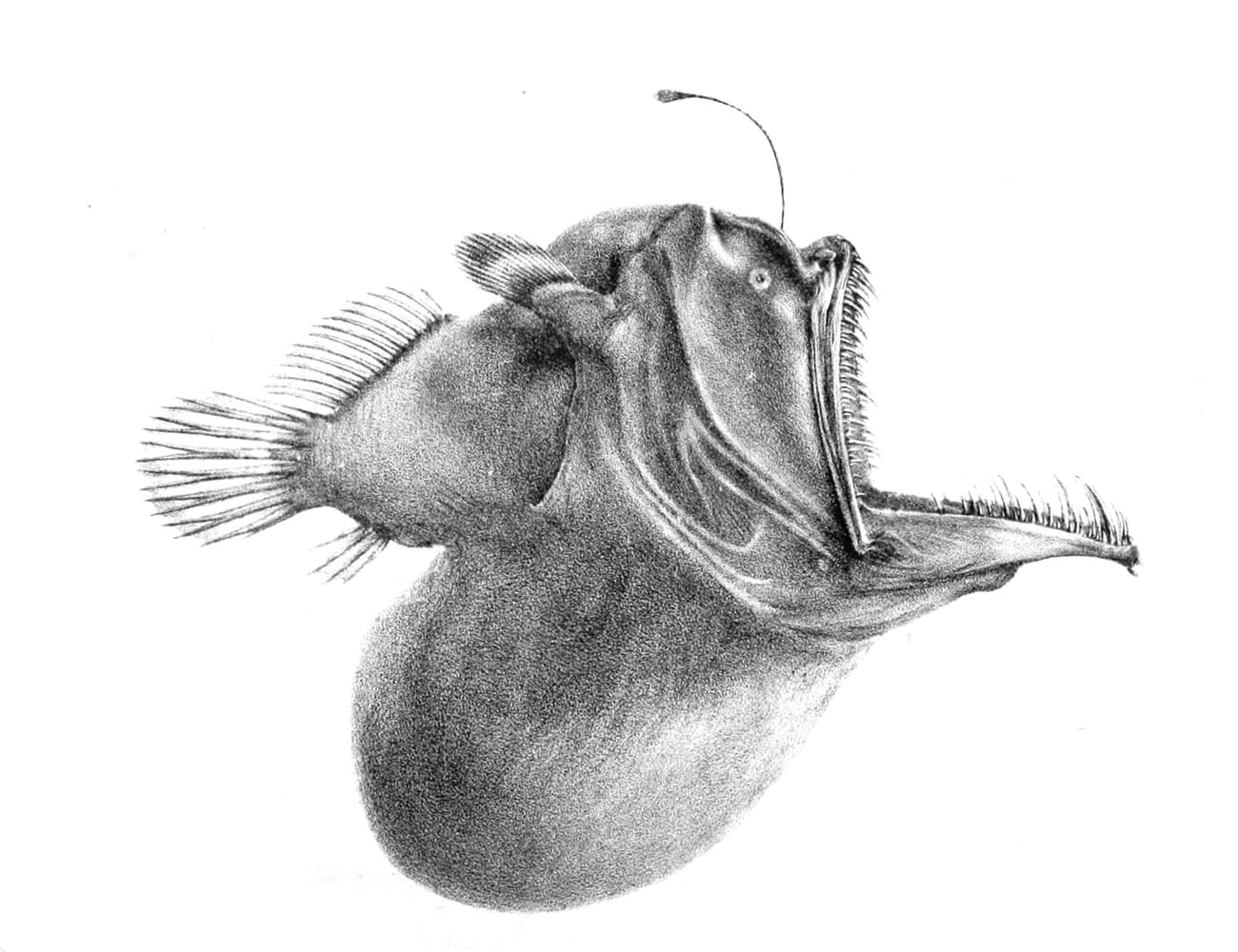
Anglerfish, Melanocetus johnsonii. Drawn by G. H. Ford, 1864.
The lure is a rod growing from her own head, lit by bacteria she keeps in its tip. Out here nothing else is worth swimming toward.
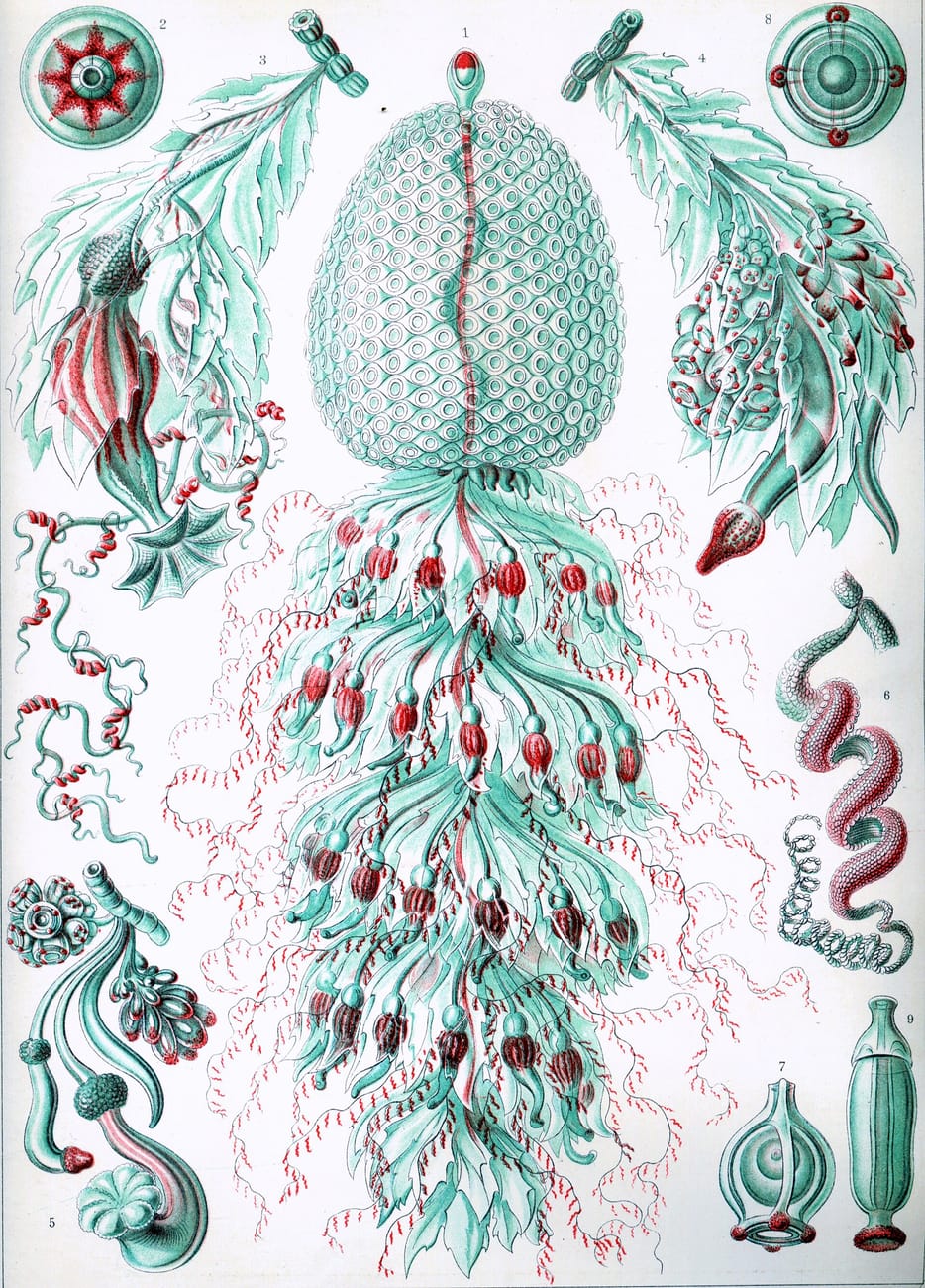
Siphonophore. Plate by Ernst Haeckel, 1904.
Not one animal but a colony: thousands of small bodies on a single stem, each with one job, strung with lights like a line of lanterns.
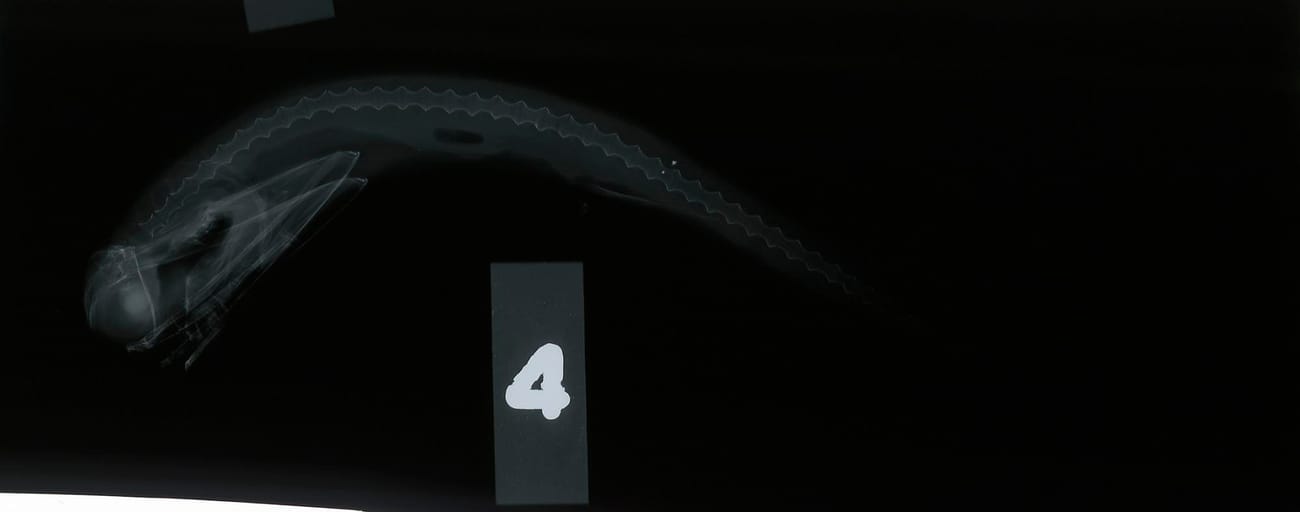
Stoplight loosejaw, Malacosteus niger. X-ray, Smithsonian.
It hunts with a red searchlight. Red barely travels down here and almost nothing can see it, so its prey never knows it is lit.